Why Proper Drying Is Critical After Rug Cleaning
Why Proper Drying Is Critical After Rug Cleaning
When most people think about professional rug cleaning, they focus on washing away dirt, stains, and odors. However, one of the most important steps in the entire rug cleaning process happens after the wash is complete: proper drying.
Whether you own a handmade Persian rug, an Oriental rug, a wool area rug, or a machine-made rug, thorough and controlled drying is essential to protecting your investment. Improper drying can lead to odors, mold growth, color bleeding, fiber damage, and even permanent structural issues.
At Atiyeh Bros., we believe that proper drying is just as important as proper cleaning. Here’s why.
What Happens If a Rug Is Not Dried Properly?
Area rugs can hold a surprising amount of moisture deep within their foundation and fibers. While the surface may feel dry to the touch, moisture can remain trapped inside the rug for days if the proper drying methods are not used.
When excess moisture remains, several problems can develop:
- Mold and mildew growth
- Musty odors
- Browning and discoloration
- Color bleeding
- Fiber deterioration
- Damage to the rug’s foundation
- Premature wear and reduced lifespan
Many of these issues may not appear immediately, making proper drying a critical step in preserving the beauty and longevity of your rug.
Why Professional Rug Drying Matters
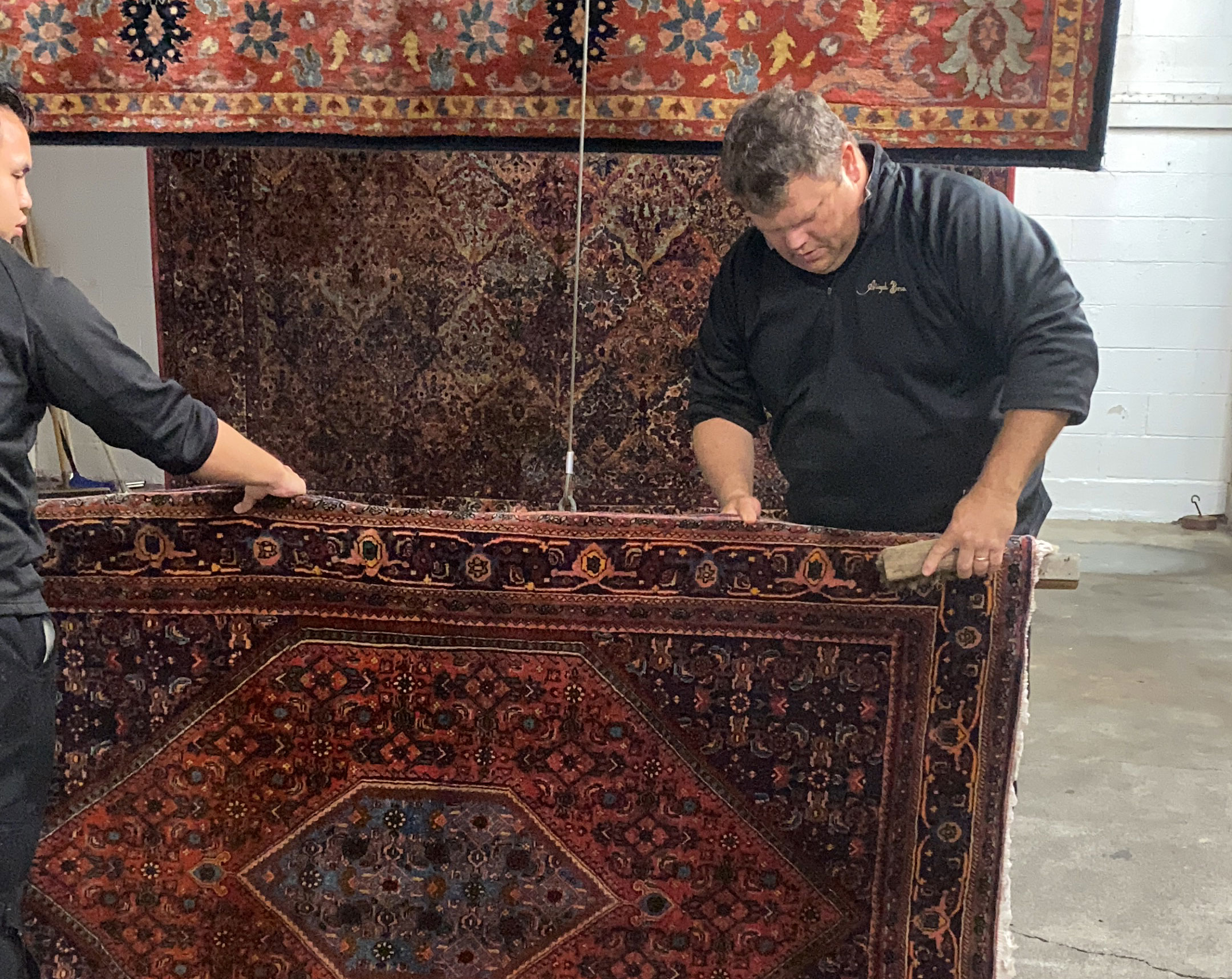
Professional rug cleaning facilities use specialized drying environments designed to remove moisture quickly and safely.
Proper rug drying often includes:
- Controlled air movement
- Temperature regulation
- Humidity control
- Moisture monitoring
- Specialized drying racks or drying rooms
These systems help ensure that moisture is removed from both the face fibers and the foundation of the rug.
Simply hanging a rug outside or laying it flat in a garage may not provide adequate drying conditions, especially in the Pacific Northwest where humidity levels can fluctuate throughout the year.
Oregon’s Climate Creates Unique Challenges
Living in Oregon offers many advantages, but our climate can make drying rugs more challenging.
The moisture and humidity common throughout the Pacific Northwest can slow evaporation and create ideal conditions for mold and mildew growth if rugs are not dried properly after cleaning.
This is particularly important for:
- Wool rugs
- Handmade Oriental rugs
- Persian rugs
- Antique rugs
- Rugs with cotton foundations
Professional drying procedures help eliminate these risks and protect your rug from moisture-related damage.
Why Proper Drying Helps Eliminate Odors
Many homeowners seek professional rug cleaning because of pet accidents, spills, or lingering odors.
While washing removes much of the source of the odor, any moisture left behind can actually contribute to new smells developing.
A rug that remains damp for too long can develop:
- Musty odors
- Mildew smells
- Sour odors
- Bacterial growth
Proper drying helps ensure your rug is truly clean—not just washed.
Handmade Rugs Require Extra Care
Handmade rugs often contain natural fibers and dyes that require specialized handling throughout the cleaning and drying process.
Improper drying can cause:
- Dye migration
- Color bleeding
- Distortion of the rug’s shape
- Foundation shrinkage
- Fiber stress
Professional rug cleaners understand how different fibers and constructions respond to moisture and drying conditions.
Questions Every Homeowner Should Ask Their Rug Cleaner
Before entrusting your rug to a cleaning company, ask a few important questions about their drying process.
Do You Dry Rugs in a Controlled Environment?
A reputable rug cleaning facility should have dedicated drying areas designed to regulate airflow, temperature, and humidity.
How Long Does the Drying Process Take?
Proper drying should never be rushed. Depending on the rug’s construction and fiber type, drying may take anywhere from several hours to multiple days.
How Do You Verify That the Rug Is Completely Dry?
Professional cleaners should have procedures in place to ensure moisture has been removed from both the fibers and the rug’s foundation before returning it to the customer.
Are Rugs Dried Indoors or Outdoors?
While outdoor drying may seem harmless, environmental factors such as humidity, pollen, dust, weather changes, and UV exposure can create additional risks.
Do You Have Experience Drying Handmade and Wool Rugs?
Different rug types require different drying techniques. Make sure your cleaner understands how to care for valuable handmade and natural-fiber rugs.
The Bottom Line
A rug is only as clean as it is dry.
Professional washing removes soil, contaminants, and odors, but proper drying protects the rug from moisture-related damage and helps ensure the cleaning process delivers lasting results.
At Atiyeh Bros., we understand that every step of the rug cleaning process matters. Our controlled drying procedures are designed to help protect your investment, preserve the beauty of your rug, and provide peace of mind that your rug is clean, healthy, and thoroughly dry before it returns to your home.
If you’re considering professional rug cleaning, don’t just ask how your rug will be cleaned—ask how it will be dried.
At Atiyeh Bros., we’ve spent more than a century helping homeowners throughout Oregon care for the rugs beneath their feet and the homes built around them. If you’re unsure which rug pad is best for your space, our team is always happy to help you find the right fit — because a beautiful rug deserves a beautiful foundation too.
0 Comments