
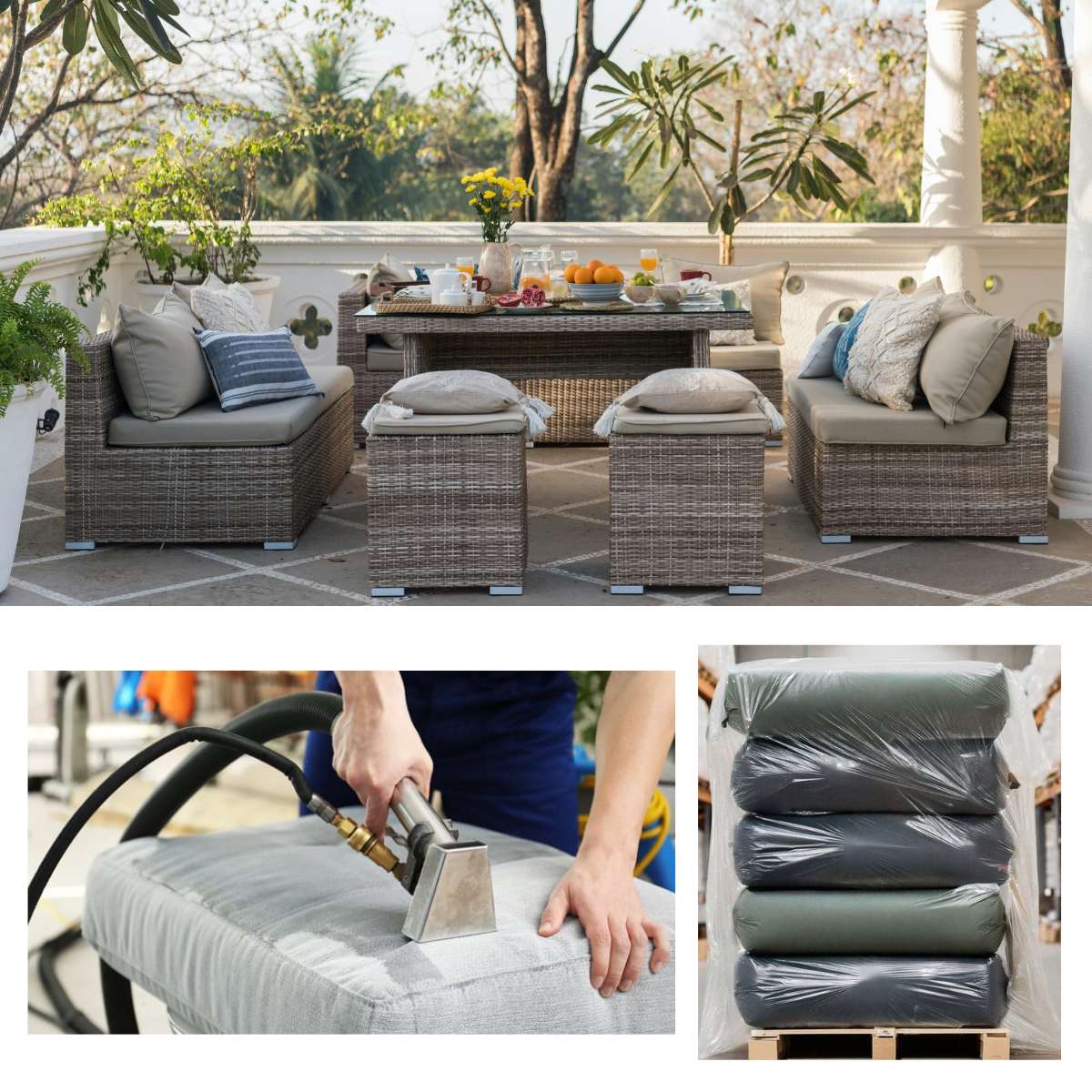
Outdoor Cushion Cleaning and Winter Storage in the Pacific Northwest
Outdoor Cushion Cleaning and Winter Storage in the Pacific Northwest
Outdoor cushions make patios, decks, and porches more comfortable throughout the warmer months. However, after a season of exposure to pollen, dust, food spills, pets, smoke, and the occasional rainstorm, they may need more than a quick brushing before winter arrives.
In the Pacific Northwest, proper outdoor cushion cleaning and storage are especially important. Our long, damp winters can create the perfect conditions for musty odors, staining, mold, and mildew. Taking time to clean, thoroughly dry, and properly store your patio cushions can help preserve their appearance and keep them ready for the next sunny season.
Here are some helpful tips for caring for outdoor cushions at home—and a few reasons you may want help from a professional.
Why Should You Clean Outdoor Cushions Before Winter?
It may be tempting to place your cushions in the garage or under a patio cover and plan to clean them in the spring. Unfortunately, several months of storage can allow existing dirt, spills, and organic matter to settle further into the fabric.
Cleaning your cushions before storage can help:
- Remove dirt, pollen, food residue, and outdoor buildup
- Prevent stains from becoming more difficult to treat
- Reduce lingering odors
- Discourage insects and rodents attracted to food residue
- Keep dirt from transferring between stacked cushions
- Make spring patio setup quicker and easier
The most important part of the process is making sure the cushions are completely dry before storing them. Even a small amount of moisture trapped inside the fabric or cushion filling can cause problems during a damp PNW winter.
How to Clean Outdoor Cushions at Home
Before cleaning any outdoor cushion, check the manufacturer’s care label. Outdoor fabrics, dyes, foam inserts, and protective treatments vary, so the safest cleaning method will depend on the material.
1. Remove Loose Dirt
Use a soft brush or vacuum with an upholstery attachment to remove leaves, pet hair, crumbs, dust, and surface debris. Pay special attention to seams, piping, buttons, and zipper areas where dirt often collects.
2. Treat Spills and Stains Promptly
If you notice a stain, address it before cleaning the entire cushion. Blot liquid spills instead of rubbing them, which can spread the stain or push it deeper into the fabric.
Use a cleaning product recommended by the cushion manufacturer and test it on a small, inconspicuous area first. Avoid using bleach or strong household cleaners unless the care instructions specifically state that they are safe for the fabric.
3. Clean According to the Care Instructions
Some removable cushion covers may be washable, while others require hand-cleaning or professional care. If the covers can be removed, follow the manufacturer’s instructions closely and avoid putting them in a dryer unless specifically permitted.
For non-removable covers, a gentle cleaning solution and soft brush may be appropriate. Avoid oversaturating the cushion, particularly if the filling is thick or slow to dry.
4. Rinse Away Cleaning Residue
If the approved cleaning method requires rinsing, remove the cleaning solution thoroughly. Soap left behind can attract new soil and may leave the fabric feeling stiff or looking uneven.
Avoid using a pressure washer unless the cushion manufacturer recommends it. Excessive pressure can damage fabric, seams, finishes, or the interior cushion material.
5. Allow Cushions to Dry Completely
This is one of the most important steps for PNW homeowners. Surface fabric may feel dry while moisture remains trapped inside the cushion.
Place cushions upright in a warm, dry, well-ventilated location. Rotate and reposition them periodically so air can reach every side. Allow extra drying time for thick seat cushions, deep cushions, and oversized chaise cushions.
Do not place cushions into bags, bins, or storage wrapping until they are completely dry inside and out.
How to Store Outdoor Cushions During a PNW Winter
Once your cushions are clean and fully dry, choose a storage area protected from rain, condensation, pests, and significant temperature changes.
A clean indoor storage room is ideal. A dry garage, shed, or weather-resistant deck box may also work, but these spaces should be checked for leaks, humidity, and evidence of rodents.
For better winter storage:
- Store cushions off the ground whenever possible
- Keep them away from exterior walls where condensation may develop
- Avoid placing heavy objects on top of cushions
- Make sure storage containers are clean and dry
- Check cushions occasionally for moisture or pests
- Avoid tightly sealing damp cushions in plastic
- Label stored cushions by furniture set to simplify spring setup
A patio cover alone may not provide enough protection during a wet Oregon winter. Wind-driven rain, ground moisture, and condensation can still reach cushions left outdoors.
When Should You Consider Professional Cushion Cleaning?
Cleaning a few small pillows at home may be manageable. Cleaning an entire outdoor furniture set can be much more difficult—especially when cushions are oversized, heavily soiled, stained, or slow to dry.
Professional outdoor cushion cleaning may be helpful when:
- You have a large number of cushions
- Cushions are too bulky to clean or move easily
- Stains or odors remain after at-home cleaning
- You do not have a suitable drying area
- Cushions have been exposed to pets, food, smoke, or heavy outdoor buildup
- You want the cushions cleaned and prepared for seasonal storage
- You do not have enough clean, dry storage space at home
Professional care can also save considerable time at the end
0 Comments